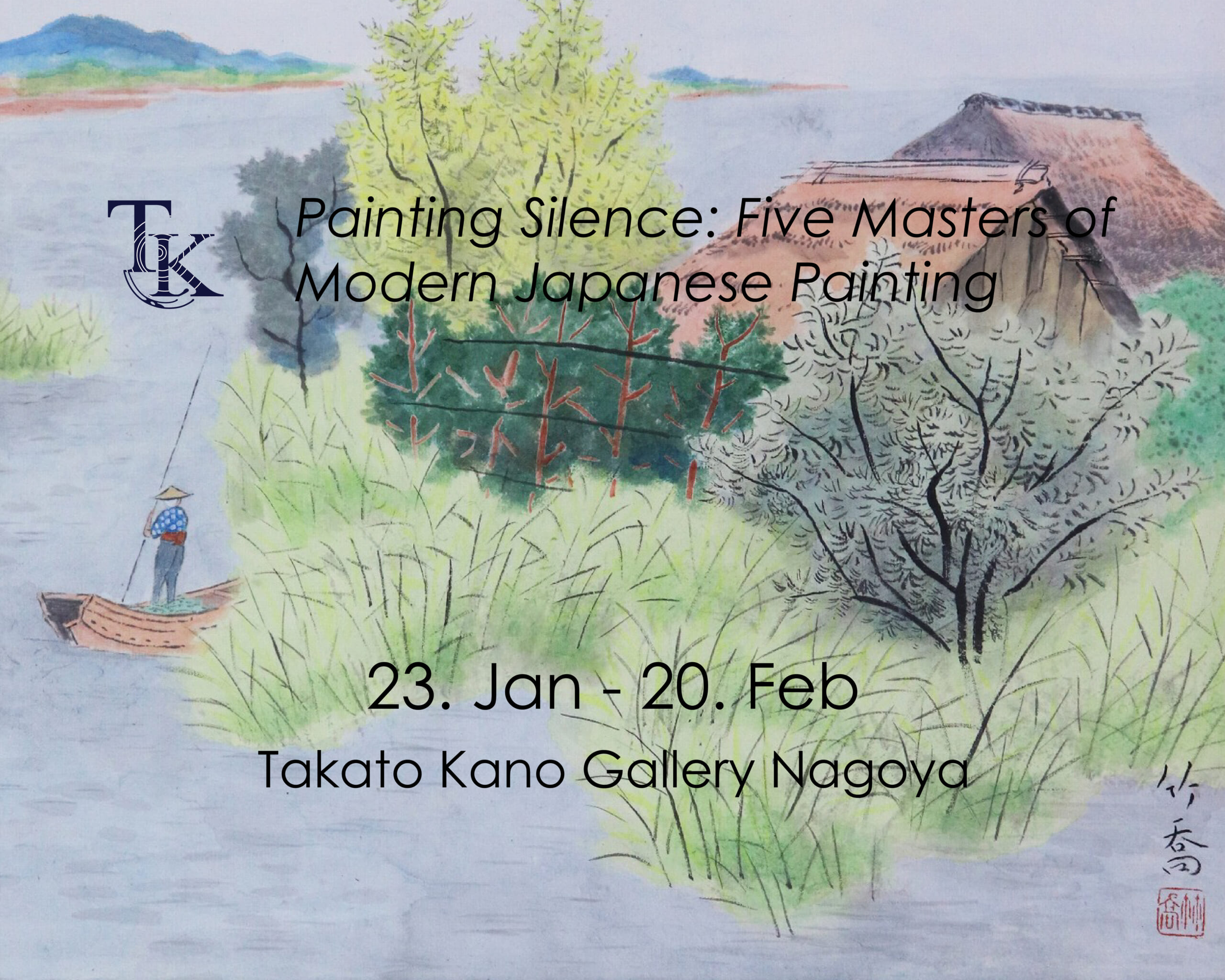
Modern Japanese painting emerged amid rapid social change and the influx of Western art, repeatedly confronting a fundamental question: How should nature be depicted?
Through observation or thought.
Through daily life or classical tradition.
Or beyond all interpretation, into silence.
This exhibition brings together five pivotal figures of modern Japanese painting:
Takeuchi Seihō (1864–1942), Yokoyama Taikan (1868–1958), Kawai Gyokudō (1873–1957), Maeda Seison (1885–1977), and Ono Chikkyo (1889–1979), to trace how nature was reimagined through distinct approaches: observation, ideology, lived experience, and classical reference.
The final chapter, devoted to Ono Chikkyo, presents a form of nature that no longer seeks to speak or explain itself, a landscape at simply exists.
This exhibition invites viewers to reconsider stillness as one of the ultimate conclusions reached by modern Japanese painting.
Chapter I | The Revolution of Observation
Takeuchi Seihō
A pioneering figure who introduced rigorous observation and physical presence into traditional Japanese painting.
For Seihō, sketching was not mere imitation, but an act of dismantling convention,
a renewal of the act of painting itself.
This chapter marks the point at which modern Japanese painting began to transform from within.
Chapter II | Nature as Thought
Yokoyama Taikan
For Taikan, nature was not merely scenery, but a vessel for spirit and ideology.Through ambiguity of form and expansive use of space,
landscape was elevated into symbolism,
establishing a philosophical axis within modern Japanese painting.
Chapter III | Lived Landscape
Kawai Gyokudō
Rural life, the passage of seasons,
and time shared between humans and nature.
Gyokudō depicts landscape not as an object,
but as lived time,
a continuum embedded in daily life.
Chapter IV | Classicism as Method
Maeda Seison
Seison did not revisit classical painting as nostalgia,
but reconstructed it as a method for the present.
By engaging with Yamato-e and historical imagery,
he draws the past back into contemporary inquiry,
continually asking: What does it mean to be “Japanese”?
Chapter V | Silent Nature
Ono Chikkyo
Human presence and narrative recede.
Only landscape remains.
Rejecting interpretation and symbolism,
nature appears as silence itself.
Here, the accumulated questions of modern Japanese painting quietly come to rest.
This exhibition is held by reservation only.
Dates: January 23 – February 20, 2026
Venue: Takato Kano Gallery Nagoya
〒460-0007
1-12-26, 10F, AKK Building, Shinsakae, Naka-ku, Nagoya, Aichi, Japan
Please note that artworks on display may change during the exhibition period.
Thank you for your understanding.